Aug 24, 2026News & Insights
What Is the Difference Between a True A6 Notebook and a Pocket Notebook?
A6 notebooks offer standardized size and more writing space, while pocket notebooks prioritize portability, quick notes, and everyday convenience.
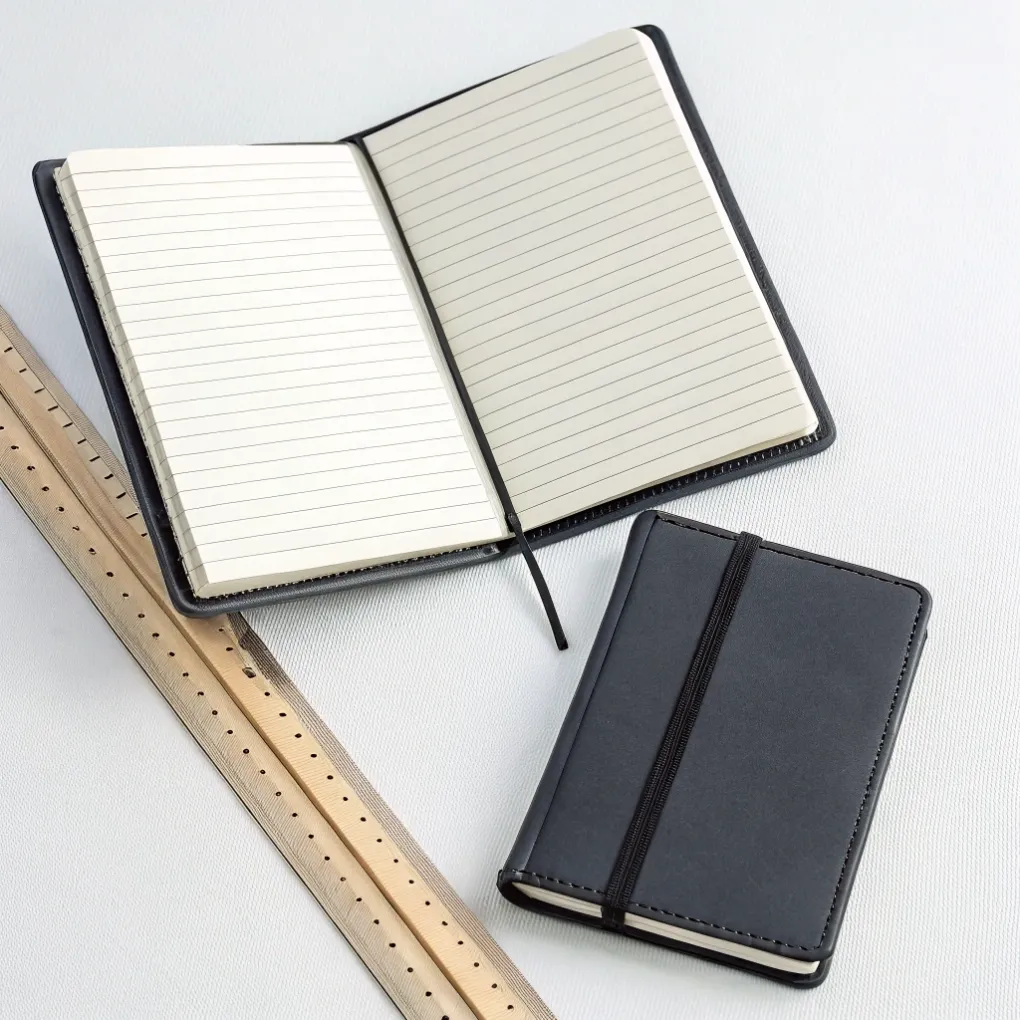
What Is the Difference Between a True A6 Notebook and a Pocket Notebook?
Are you frustrated by notebooks that are too small to write in or do not fit your custom covers? Sizing mistakes ruin your daily writing experience and waste corporate merchandise budgets.
A true A6 notebook follows the standardized ISO 216 size of 105 × 148 mm, offering structured writing space, while a pocket notebook is an informal category around 90 × 140 mm built for maximum portability.
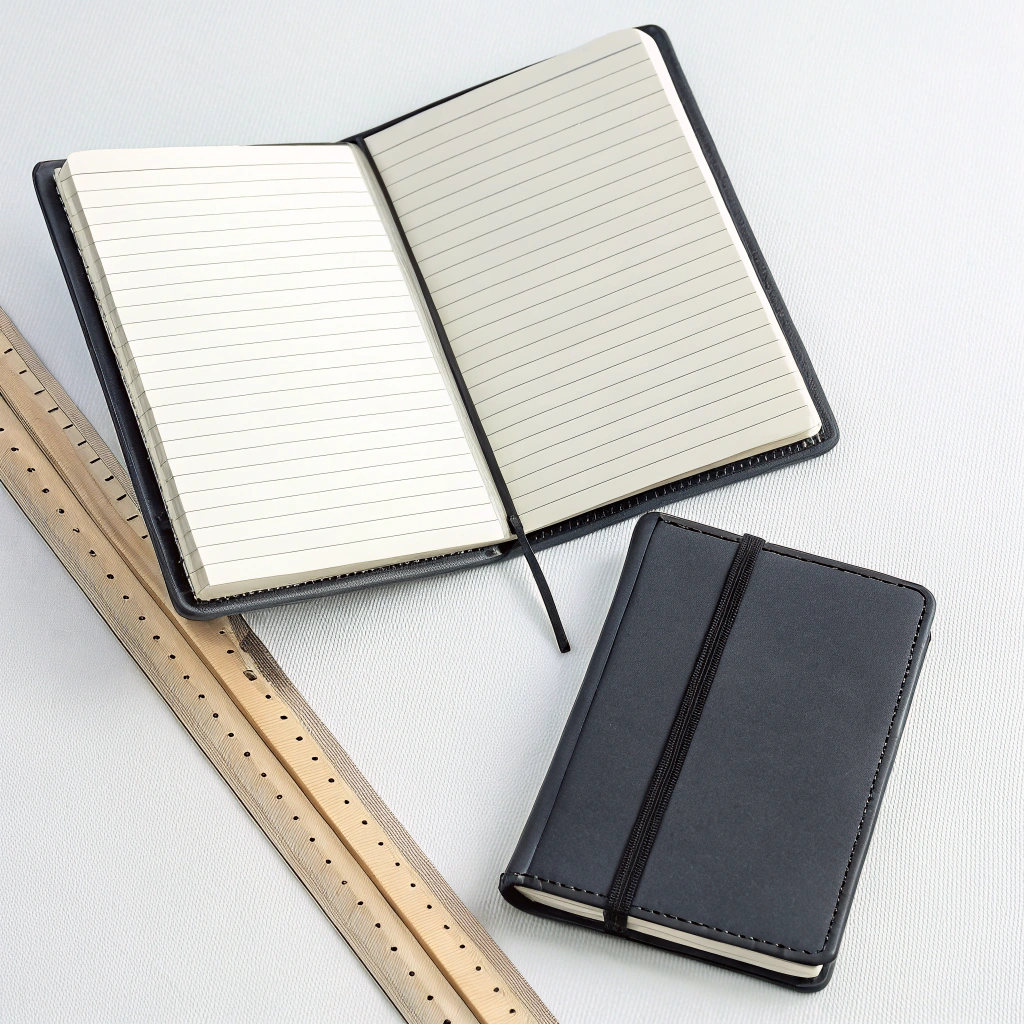
When I worked in a printing factory years ago, clients often mixed up paper sizes and pocket terms. That small difference causes real issues with custom covers, page usability, and refill systems. Let us break down how these two compact notebook formats compare.
What Is the Difference Between an A6 Notebook and a Pocket Notebook?
Do you find that your compact notebook runs out of page space too quickly during fast meetings? Confusing standardized sizes with generic pocket dimensions leads to cramped notes and wasted accessories.
The main difference is that a true A6 notebook has fixed ISO dimensions of 105 × 148 mm for extra writing room, whereas pocket notebooks vary widely around 90 × 140 mm to fit inside clothing pockets.
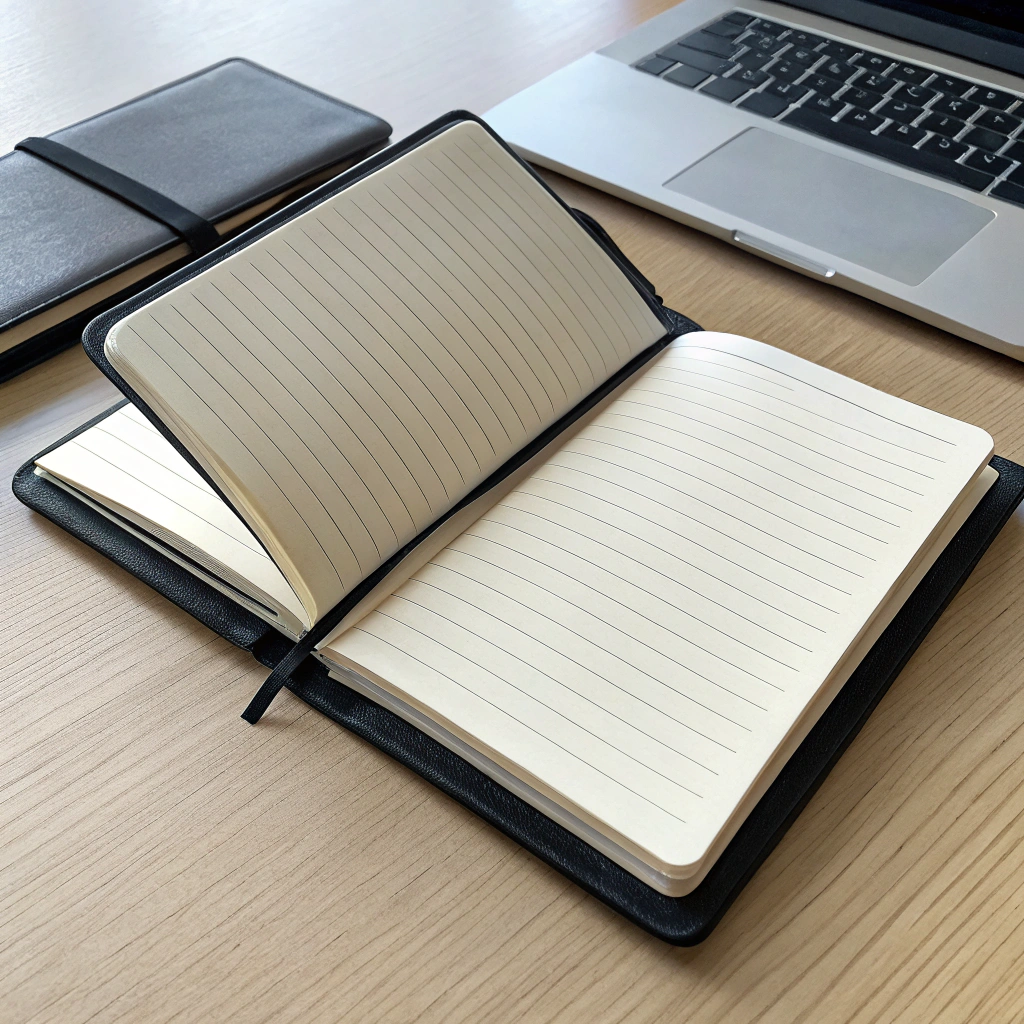
Sizing, Refill Fit, and Usability
Many buyers ask which notebook is smaller, but the better question is what you intend to write. An A6 notebook offers roughly 20 percent more page surface than a standard pocket book. That extra width allows you to write full sentences, outline daily tasks, or use fountain pens without constantly breaking lines.
Standardized dimensions also make a big difference for covers and refills. Because A6 is an international ISO standard, replacement inserts and leather covers fit predictably across different manufacturers. By contrast, pocket formats differ by brand. A 3.5 × 5.5 inch insert may not fit neatly inside a custom portfolio designed for true A6 paper.
Specification Feature | True A6 Notebook | Common Pocket Notebook | Practical Impact |
|---|---|---|---|
Exact Dimensions | 105 × 148 mm (4.13 × 5.83 in) | 90 × 140 mm (3.5 × 5.5 in) | A6 gives noticeably wider margins for full thoughts |
ISO Standardization | Fixed international ISO 216 standard | Non-standardized brand description | A6 simplifies buying replacement inserts and covers |
Line Capacity | 20 to 24 lines per page | 14 to 18 lines per page | A6 handles long meeting summaries and bullet journals |
Carry Location | Small bags, pouches, desk corners | Shirt pockets, jean pockets, small jackets | Pocket size delivers effortless carry everywhere |
What Is the Best A6 Notebook?
Are you struggling to choose an A6 notebook that avoids ink bleed-through and lays completely flat on your desk? Cheap paper and stiff glued spines make small notebooks uncomfortable to use.
The best A6 notebook features thread-bound lay-flat binding, 80 to 100 GSM fountain-pen-friendly bleed-resistant paper, a durable hardcover or flexible PU leather wrap, and an expandable back pocket.
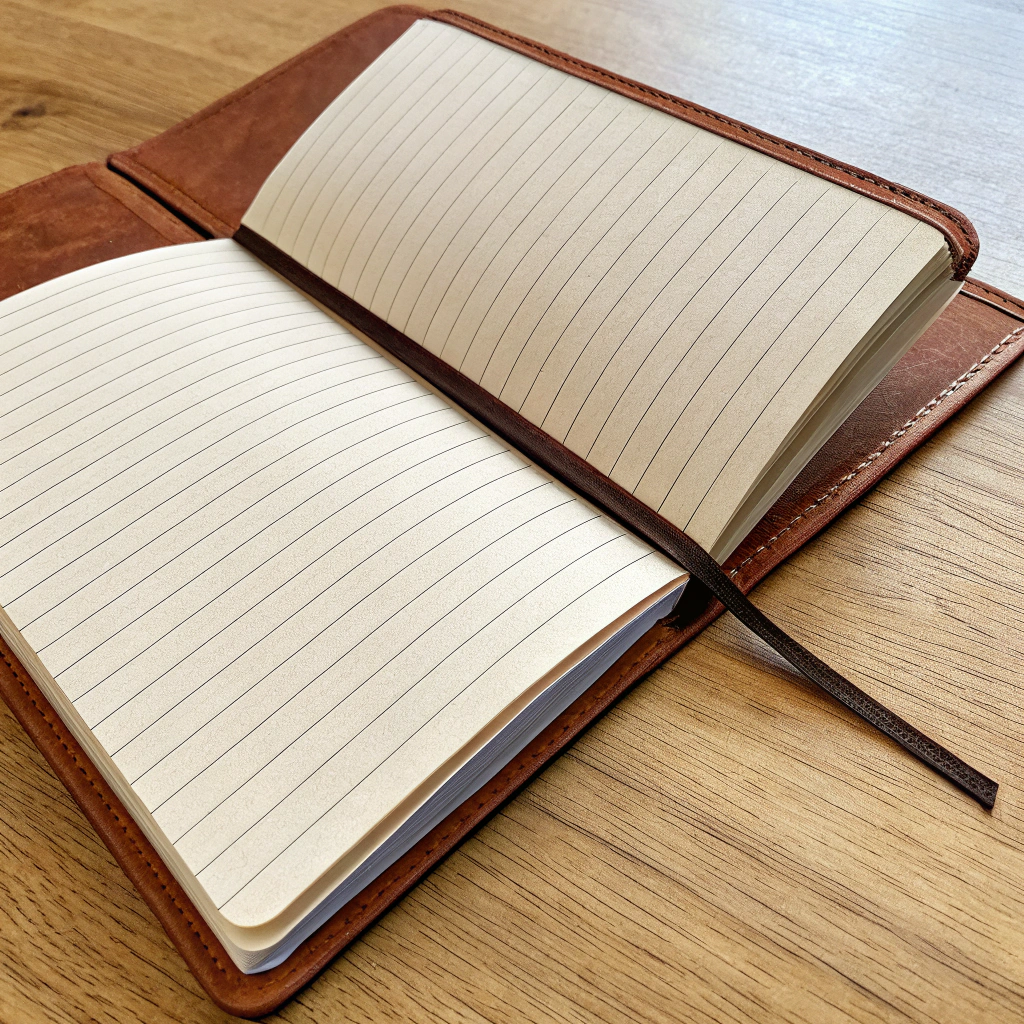
Key Materials and Construction Standards
When I help marketing managers like Jacky source branded notebooks, I always test paper weight and binding quality first. A notebook can look beautiful on the outside, but it becomes useless if ink bleeds through the page or if the spine snaps shut when you write.
The best A6 notebooks use thread-sewn section binding so the book opens flat at 180 degrees. Look for cream-colored paper between 80 and 100 GSM. This weight handles gel pens, rollerballs, and fountain pens cleanly without feathering. Adding an elastic band, ribbon bookmark, and rear document pocket turns a compact notebook into a professional everyday organizer.
Notebook Component | Standard / Budget Quality | Premium Build Quality | Benefit to the Writer |
|---|---|---|---|
Book Binding | Glued perfect binding | Thread-sewn lay-flat binding | Stays completely open on desks without holding |
Paper Stock | 60 to 70 GSM wood-pulp paper | 80 to 100 GSM acid-free paper | Prevents ink feathering and double-sided ghosting |
Outer Cover | Thin paperboard laminate | Soft-touch PU leather or stiff buckram | Protects pages from bent corners and spills |
Extra Features | None included | Ribbon marker, pen loop, back pocket | Keeps loose receipts and quick notes organized |
What Is the Point of a Pocket Notebook?
Do you struggle to capture sudden ideas or urgent tasks before you forget them during your daily commute? Carrying a heavy, bulky planner everywhere makes quick note-taking slow and inconvenient.
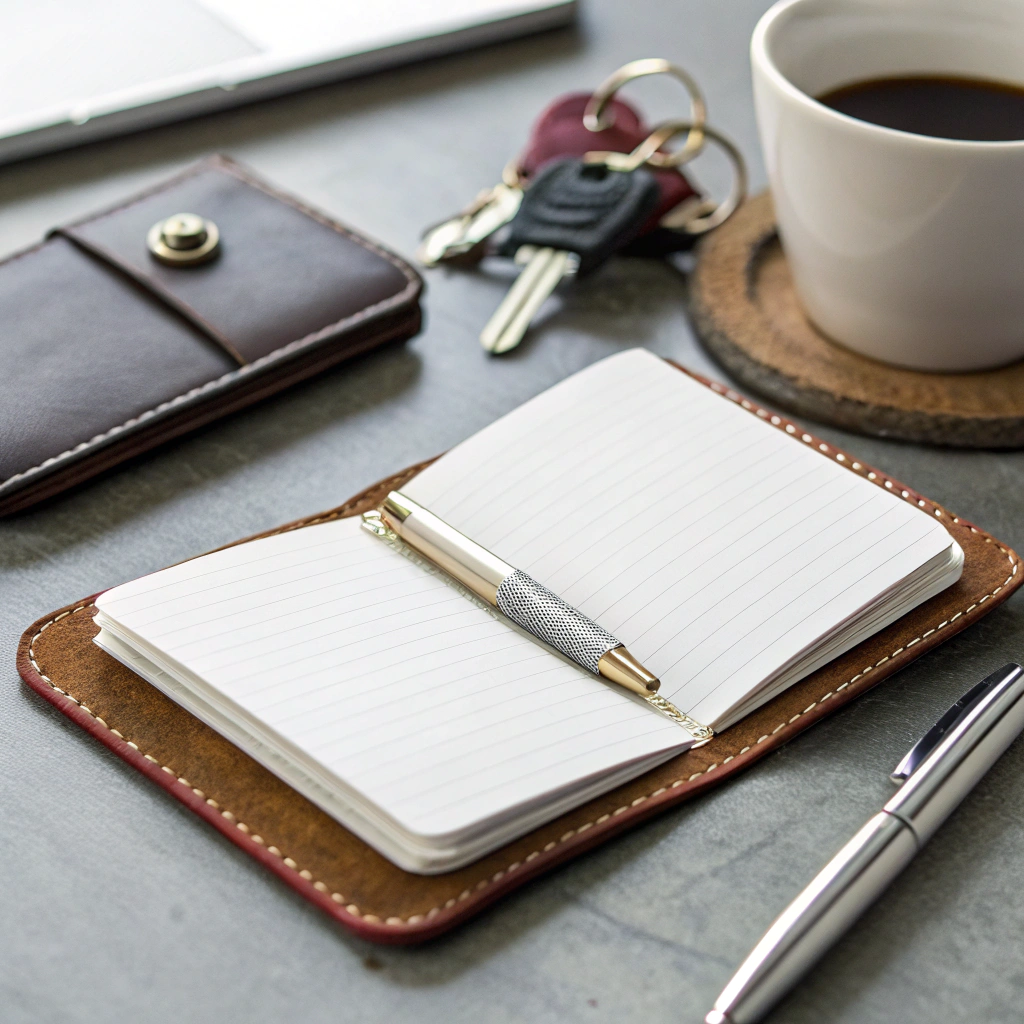
The main point of a pocket notebook is immediate access for quick field notes, short checklists, phone numbers, and sudden ideas without the bulk of a full-sized planner or electronic screen.
Practical EDC Value and Fast Note Capture
A pocket notebook is not built for lengthy essays or comprehensive project planning. Its primary strength is speed and portability. When you need to jot down a measurement on a site visit, record a quick contact number, or track a grocery list, pulling a small pad from your pocket takes two seconds.
For corporate gifting, slim pocket notebooks offer high utility at a cost-effective price point. They work exceptionally well as event giveaways, trade show pads, or conference swag. Recipients can slide them into their front pockets immediately, ensuring that your company logo stays with them throughout the day.
Notebook Format | Best Everyday Purpose | Typical Lifespan | Ideal User Profile |
|---|---|---|---|
Slim Pocket Memo | Fast checklists, phone numbers, quick ideas | 1 to 3 months | Field engineers, event staff, daily commuters |
Structured A6 Journal | Meeting minutes, project logs, daily planning | 6 to 12 months | Brand managers, executives, creative planners |
Spiral Pocket Pad | Quick tear-out notes and scratch math | 1 month | Warehouse supervisors, trade show visitors |
Conclusion
Choose a true A6 notebook for structured daily planning and generous writing space, or pick a compact pocket notebook for rapid idea capture and effortless daily carry.