Oct 14, 2026News & Insights
What Is the Best Baseball Cap for a Small Head?
The best caps for small heads feature shallow crowns, soft panels, shorter brims, adjustable sizing, and simple tailoring solutions for comfortable, proportionate everyday wear.
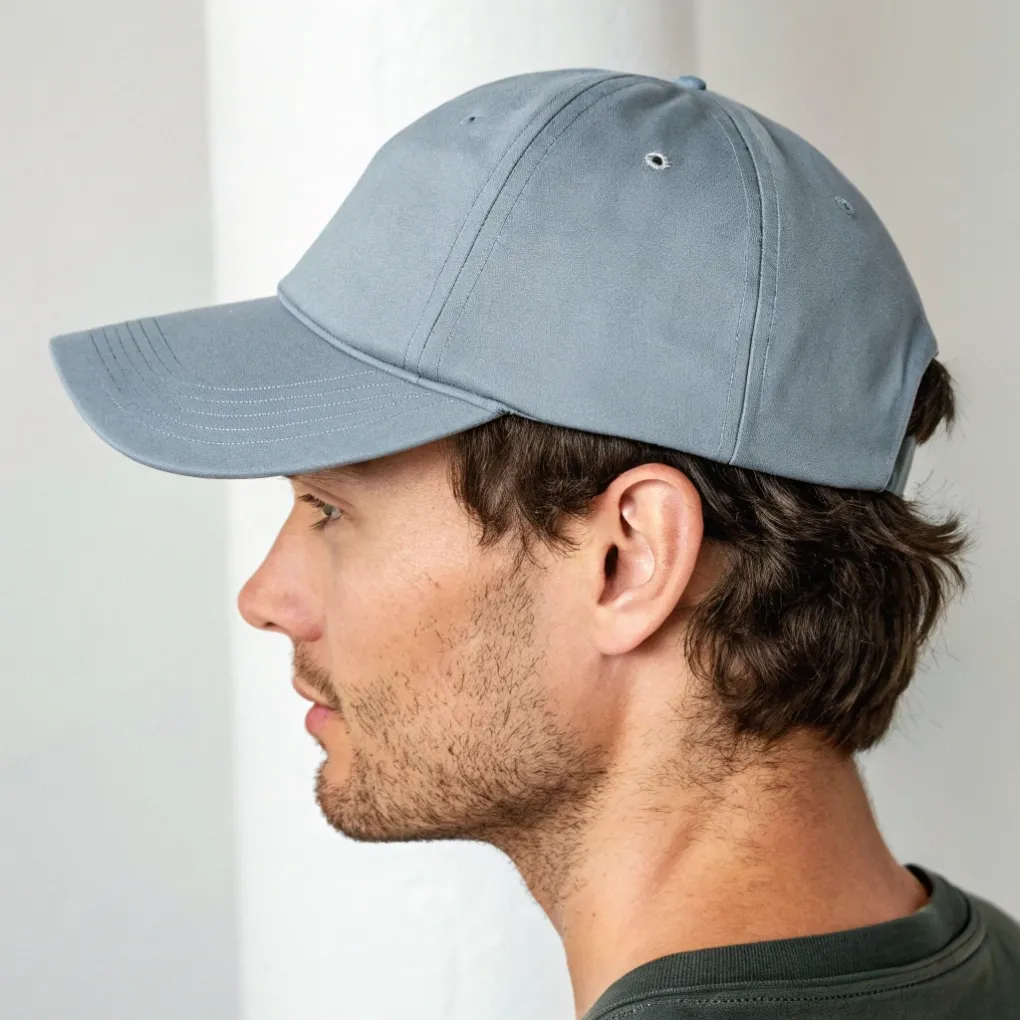
What Is the Best Baseball Cap for a Small Head?
Do you pull an adjustable strap to its tightest notch only to see the back fabric bunch up awkwardly, the side panels push your ears down, and the crown tower above your forehead like an empty dome? Standard “One Size Fits Most” caps cater to head circumferences between 57 and 60 cm, leaving smaller head profiles looking swamped and disproportionate.
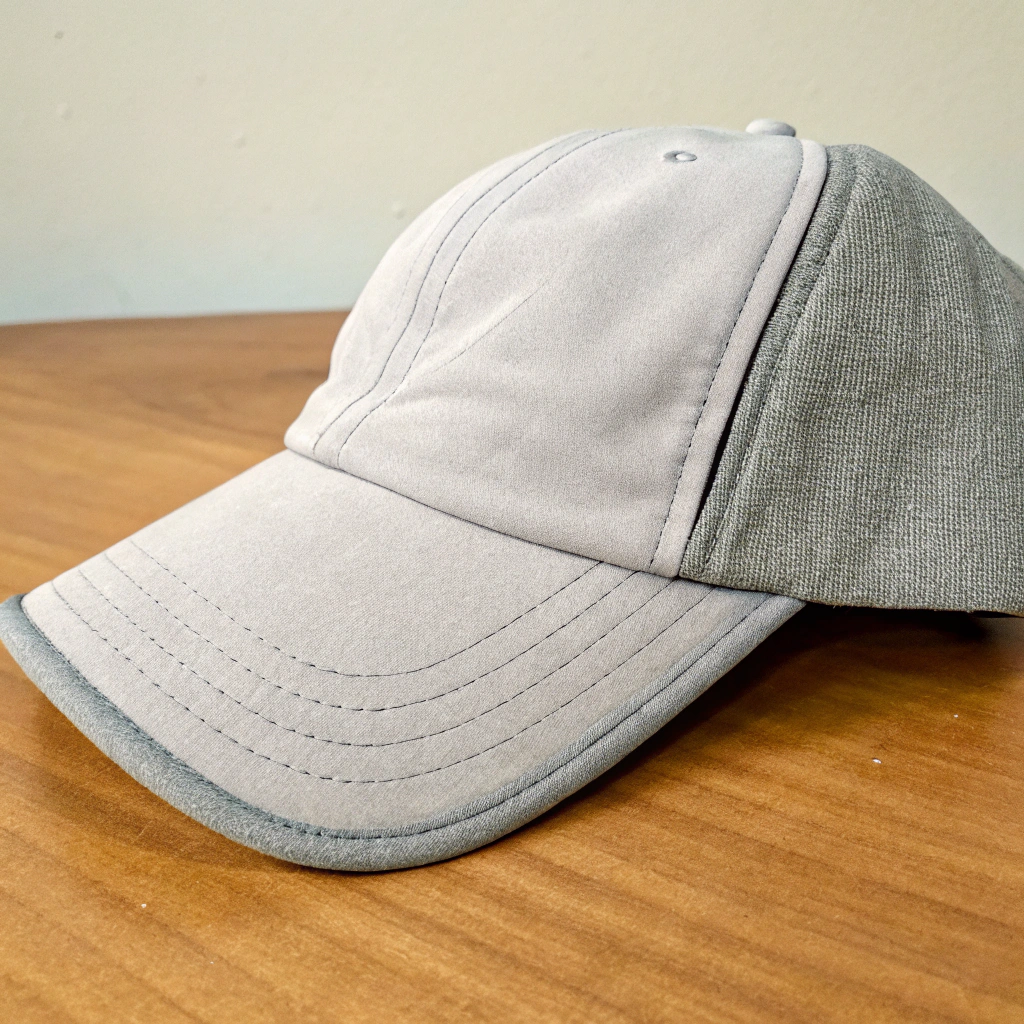
The best baseball cap for a small head is an unstructured, low-profile six-panel “dad cap” with a shallow crown depth (10 to 12 cm), a shorter curved brim (under 7 cm), and an adjustment strap capable of cinching cleanly down to 52 to 55 cm.
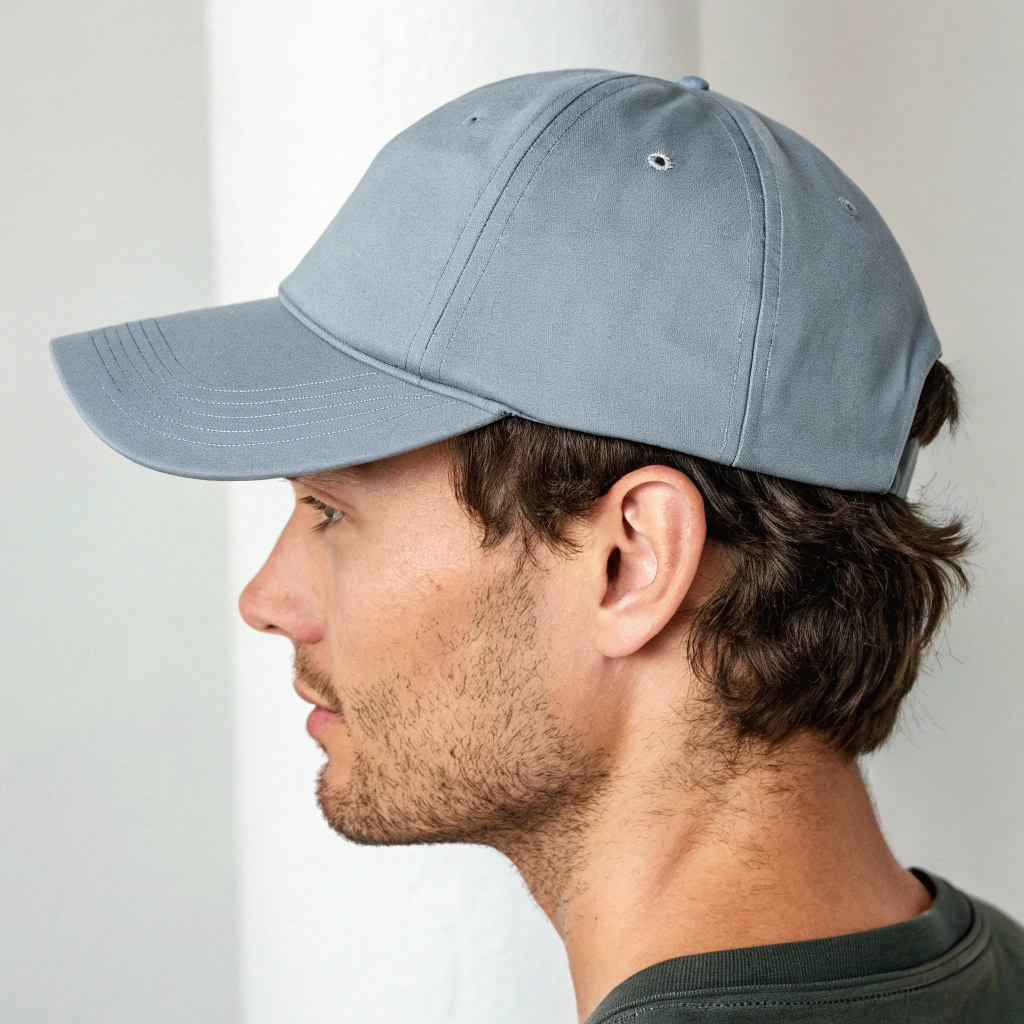
When I started my career working in a printing and headwear embroidery factory years ago, I handled thousands of cap blanks from major mills. An ill-fitting hat is rarely just a circumference issue; it is a three-dimensional pattern failure. If the buckram backing inside the front panels is too stiff or the crown depth is cut too deep, no amount of strap-tightening will make the hat look proportionate. Let us examine which cap styles flatter smaller faces, explore alternative hat silhouettes, and review practical methods to tailor an existing cap for a snug fit.
What Is the Best Baseball Cap for a Small Head?
Are you tired of buying caps that claim to be adjustable but flare out around your temples? Finding a flattering baseball cap requires looking past marketing buzzwords and evaluating crown architecture.
The best baseball caps for smaller heads feature low-profile crowns, unstructured washed cotton twill construction, and narrow brims, with top-tier models including the ‘47 Brand Clean Up, Patagonia P-6 LoPro Trucker, and youth or women-specific fitted sizes.
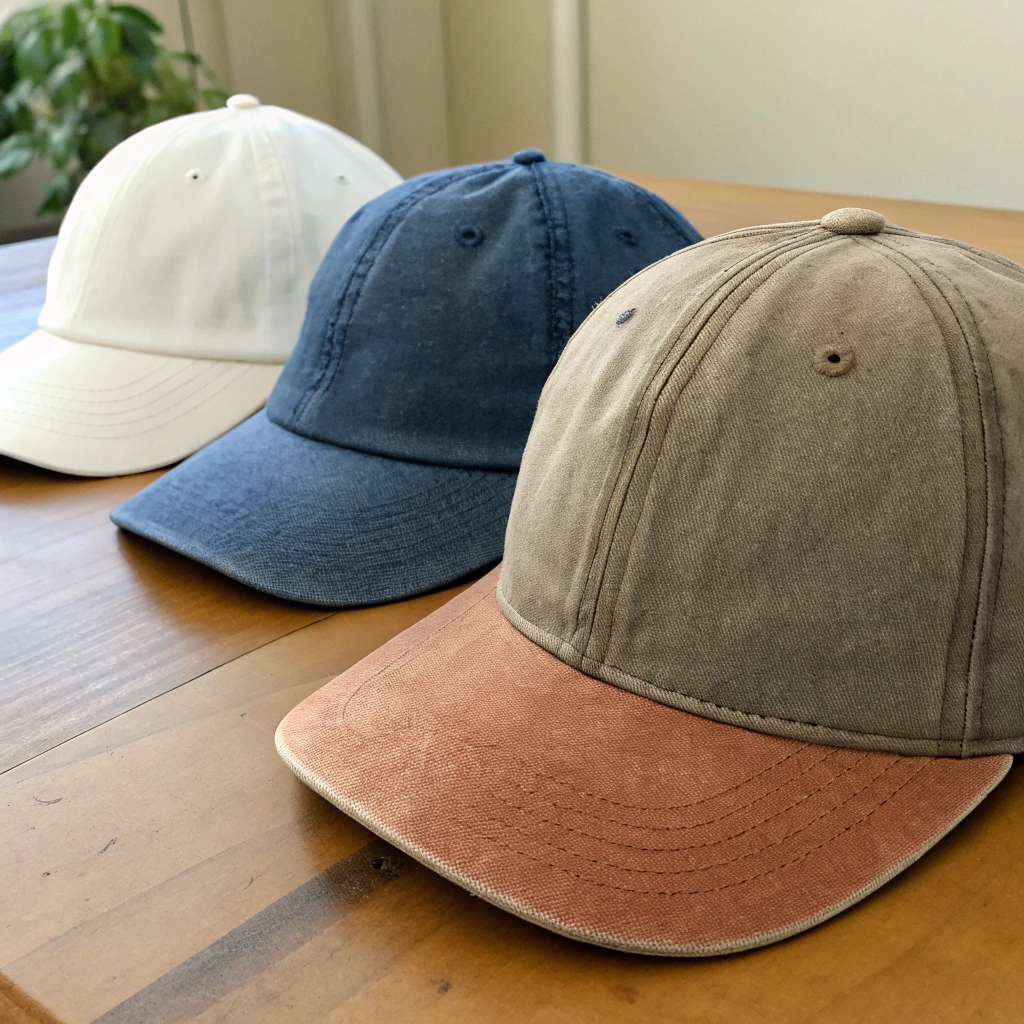
Crown Profiles, Unstructured Panels, and Sizing Metrics
The single most critical measurement for smaller heads is crown height (measured along the seam from the center top button down to the lower sweatband edge). High-profile structured caps (like the traditional flat-brim New Era 59FIFTY) measure 15 to 17 cm in depth, leaving excessive empty headspace. In contrast, low-profile designs measure between 10.5 and 12 cm, allowing the fabric to rest naturally against your skull without pushing down against your ears.
Unstructured caps (often called “dad hats”) eliminate the stiff polyester mesh backing (buckram) behind the front two panels. Because the fabric is relaxed, washed cotton twill, it drapes directly to your anatomical contours rather than holding an artificial, boxy shape. For branding and marketing managers like Jacky developing corporate lifestyle headwear, specifying low-profile, unstructured 100% bio-washed cotton blanks ensures the hat flatters both petite team members and larger executives without looking bulky.
Hat Model / Silhouette | Crown Profile & Depth | Front Panel Support | Head Circumference Range | Fit Verdict for Small Heads |
|---|---|---|---|---|
‘47 Brand Clean Up | Low-Profile (11 cm) | Unstructured (Soft twill) | 53 to 57 cm (Adjustable slide) | Gold Standard: Hugs head contours cleanly |
Patagonia LoPro Trucker | Low-Profile (11.5 cm) | Semi-structured organic canvas | 54 to 58 cm (Snapback closure) | Best Sport Hybrid: Mesh back without tall crown |
New Era 9TWENTY | Low-Profile (11 cm) | Unstructured relaxed fit | 52 to 56 cm (Fabric strapback) | Best Street Classic: Natural curved visor drape |
Traditional 59FIFTY Fitted | High-Profile (16 cm) | Heavily structured stiff buckram | Fixed sizes (Runs deep) | Avoid: Flares widely; overpowers small faces |
What Kind of Hats Look Good on Small Heads?
Do you feel restricted to baseball caps because wide-brim hats and structured fedoras swallow your features? Branching out into other headwear categories requires selecting styles that maintain tight facial proportions.
Hats that look best on small heads include low-profile baseball dad caps, shallow-crown fisherman beanies, structured newsboy or flat caps, short-brim fedoras (trilbys), and narrow-brim bucket hats.
!
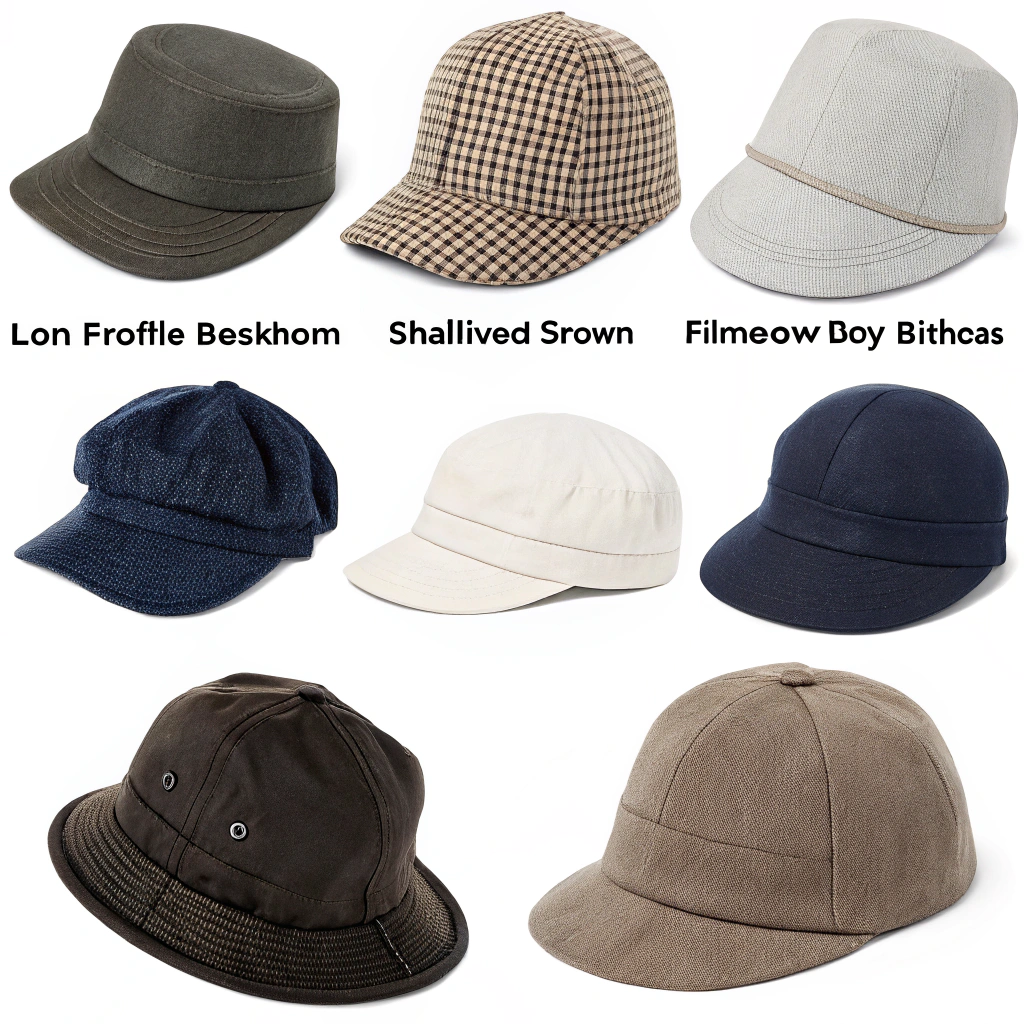
Balancing Facial Width, Visor Projection, and Crown Height
Headwear balance is governed by visual weight. When your facial structure is delicate or narrow, any brim extending past the outer cheekbones visually dwarfs your face. A fisherman beanie worn above the ears draws the eye upward without adding horizontal bulk. Similarly, a vintage wool flat cap sits close to the temples and follows the natural jawline without flared side panels.
When choosing sun protection or streetwear bucket hats, check both brim angle and brim width. Wide, floppy sun hats cause small faces to disappear under fabric. A short, downward-angled bucket hat (with a brim width under 5 cm) provides UV shade while framing narrow jawlines cleanly. Avoiding high-contrast oversized logos on the front panel keeps the visual focus on your face rather than the accessory.
Alternative Hat Style | Ideal Proportion Spec | Visual Framing Effect | Sizing Recommendation |
|---|---|---|---|
Fisherman Beanie | 5 to 7 cm cuff depth; above-ear wear | Elongates the neck; zero temple bulk | 100% Merino wool with tight elastane rib |
Short-Brim Bucket Hat | 4.5 to 5 cm steep downward brim | Frames cheekbones without wide flares | Look for size S/M or internal pull-drawstrings |
Classic Wool Flat Cap | Low-slope crown sewn directly to peak | Slim lateral profile along temple lines | Measure precise fitted circumference (e.g., 54 cm) |
Trilby / Short Fedora | Narrow 4 cm brim snapped up at rear | Adds height without horizontal width | Pick soft wool felt over stiff straw builds |
How to Make a Hat Fit a Small Head?
Have you purchased a rare or favorite cap that is just slightly too loose around the sweatband, causing it to slide forward or wobble in the wind? You do not have to discard a loose hat when simple tailoring methods can reduce the internal circumference.
You can make a hat fit a small head by applying self-adhesive foam hat-sizing tape behind the sweatband, threading a thin elastic cord through the inner band channel, or carefully wetting and heat-shrinking 100% cotton panels.
Hat-Reducer Tapes, Sweatband Padding, and Shrinking Techniques
The most reliable, non-destructive way to resize a cap is using adhesive foam hat-reduction strips. Lift the internal sweatband along the front forehead and rear panels, peel the adhesive backing, and stick the high-density EVA foam strips directly to the inside of the hat shell before folding the sweatband back down. Because the foam sits hidden behind the sweatband, it remains invisible, absorbs sweat, and reduces internal circumference by 1 to 2 full centimeters (roughly one hat size).
If your cap is made of 100% unwashed cotton twill and lacks plastic brim stiffeners, you can shrink it slightly using warm water. Submerge the crown (avoiding the brim if it uses cardboard backing) in warm water (50°C to 60°C), squeeze out excess moisture, and blow-dry the fabric on medium heat. The natural cellulose fibers will contract, tightening the fit. For adjustable strapback caps with excess tail strap, tuck the loose fabric into the metal grommet slot on the side rather than cutting it.
Tailoring Technique | Materials Required | Circumference Reduction | Reversibility | Best Applied On |
|---|---|---|---|---|
Adhesive Foam Sizing Strips | EVA foam tape strips | 1 to 2 cm (Half to full size) | 100% Reversible (Peels off) | All structured and unstructured caps |
Rear Sweatband Elastic Stitch | 1.5 cm wide elastic + needle | 1.5 to 3 cm custom cinch | Reversible (Snip thread) | Soft bucket hats & unstructured dad caps |
Controlled Warm-Water Shrink | Warm water + handheld hairdryer | 0.5 to 1 cm overall contraction | Permanent (Fibers shrink) | 100% Unsanforized cotton twill caps only |
Silicone Sweatband Insert | Medical-grade silicone strip | 0.8 to 1.2 cm reduction | Washable & reusable | Fitted baseball caps and flat caps |
Conclusion
Finding the right baseball cap for a small head comes down to prioritizing low-profile crowns, unstructured washed cotton panels, and proportioned brims that follow your natural facial contours, ensuring comfortable wear and a flattering silhouette every day.