Oct 15, 2026News & Insights
Is It Better to Drink Out of Stainless Steel or Aluminum?
Stainless steel offers safer, durable hydration than aluminum, with corrosion resistance, no synthetic inner lining, minimal leaching, and easy everyday maintenance.
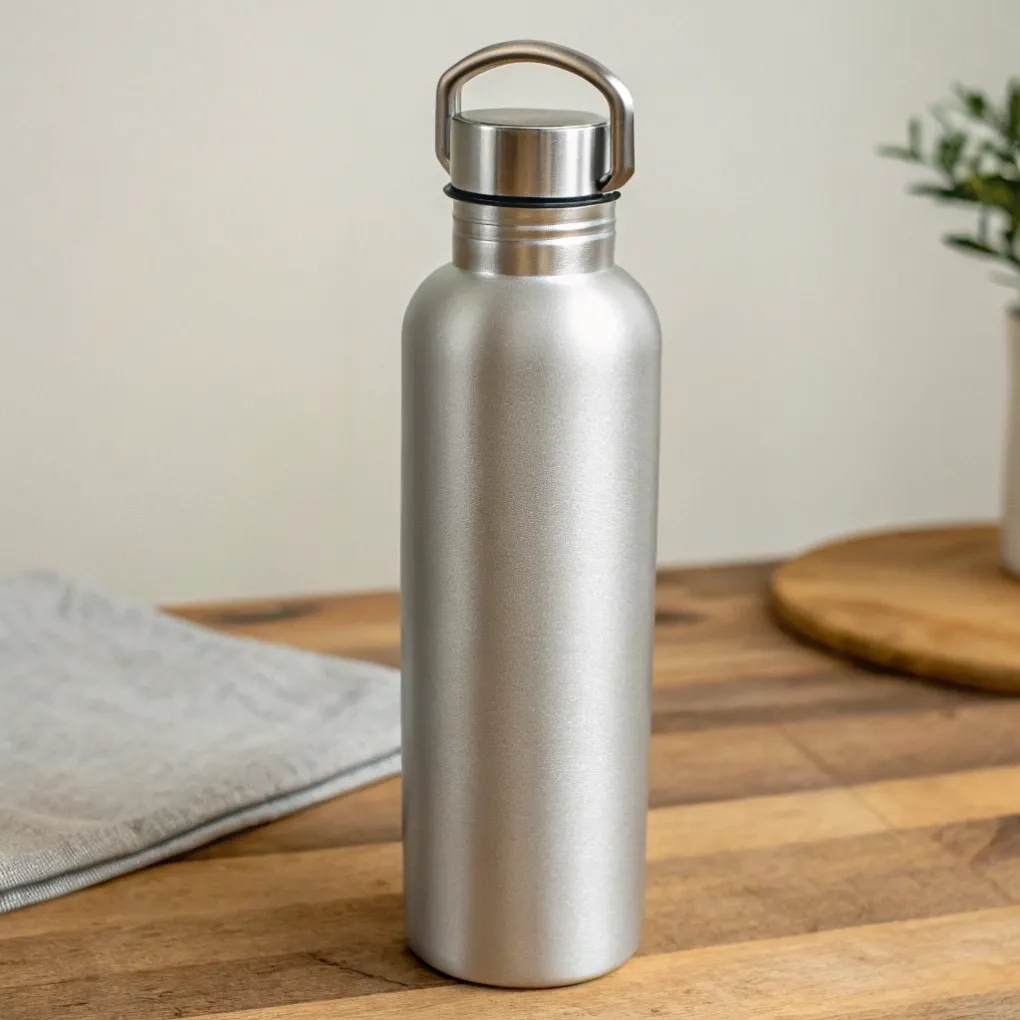
Is It Better to Drink Out of Stainless Steel or Aluminum?
Do you reach for a lightweight metal flask thinking all metal drinkware offers the same health benefits, only to notice an off-flavor in your water or wonder what resin coats the inside? Assuming metal bottles are chemically identical can lead to purchasing containers that dent easily, degrade under acidic drinks, or rely on synthetic internal coatings.
It is generally better to drink out of food-grade 18/8 (304) or 316 stainless steel because it is naturally non-reactive, requires no synthetic internal epoxy lining, resists corrosion from acidic beverages, and supports double-wall vacuum insulation to maintain temperatures all day.
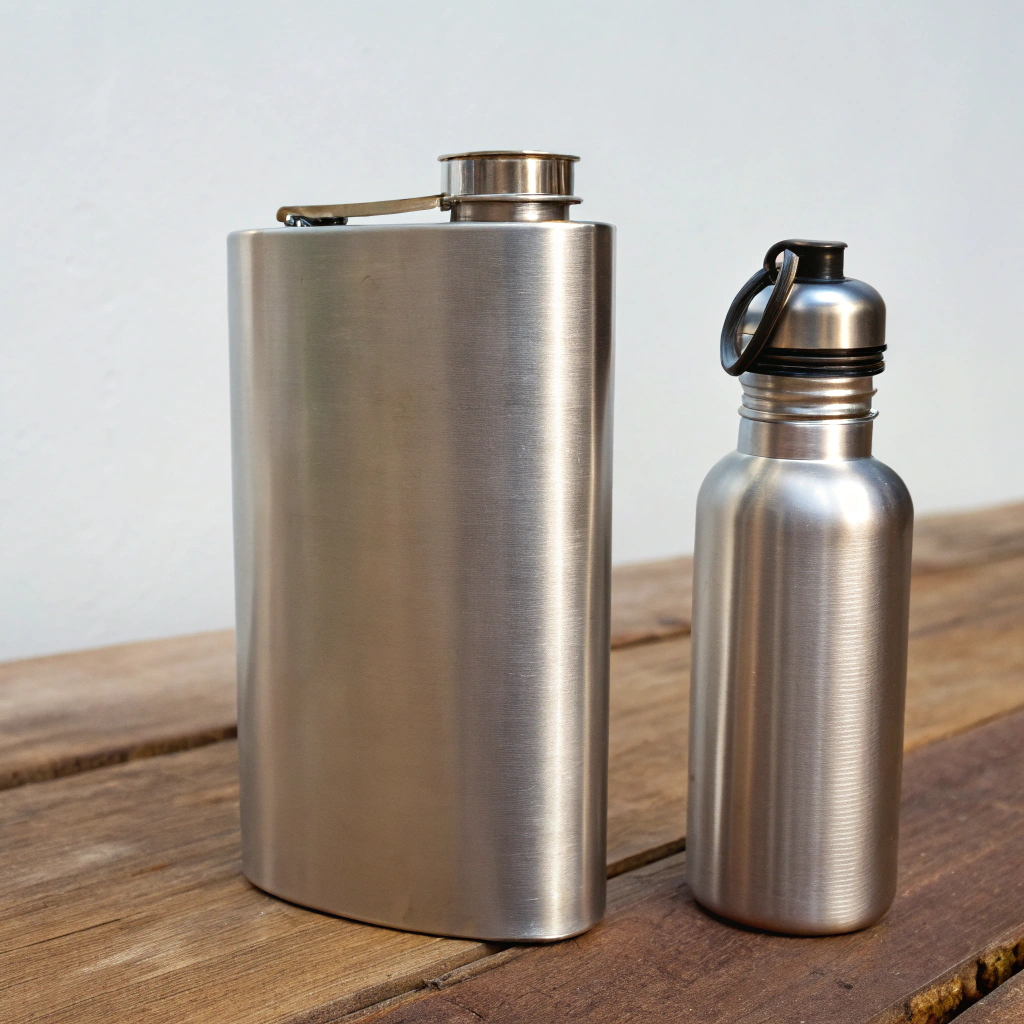
When I started my career working in a printing and corporate merchandise factory years ago, I handled thousands of drinkware units made from both extruded aluminum slugs and deep-drawn stainless steel coils. The fundamental difference between the two metals is not just weight; it is surface chemistry. Stainless steel protects itself through a natural metallurgical alloy, while raw aluminum is chemically reactive with acidic liquids and almost always requires an internal baked-on polymer barrier. Let us evaluate which metal is the healthiest to drink from, verify the daily safety of stainless steel, and examine how their health profiles compare.
What Is the Healthiest Metal to Drink From?
Are you wondering which metal provides the purest drinking experience without leaching unwanted metallic ions, microplastics, or synthetic chemicals into your water? Misidentifying metal grades can leave you drinking from raw or coated surfaces unsuited for daily use.
The healthiest metals to drink from are medical-grade titanium and food-grade 316 or 304 (18/8) stainless steel because they are completely inert, hypoallergenic, and form self-healing chromium oxide or titanium oxide layers that eliminate the need for chemical liners.
Passivation Layers, Inert Surfaces, and Pure Hydration
The health profile of any metal container depends on its surface passivity. Titanium is the absolute gold standard for biocompatibility—it is non-reactive, resists aggressive acids, and creates zero metallic taste, but its high extraction and manufacturing costs make it an expensive choice for daily use.
Right behind titanium is food-grade austenitic stainless steel (AISI 304 and 316). Containing at least 18% chromium and 8% to 10% nickel, these alloys naturally develop an invisible, non-porous chromium oxide passive barrier upon exposure to oxygen. This layer stops metal atoms from migrating into neutral water, lemon slices, or hot coffee.
Aluminum, by contrast, is an active amphoteric metal. If raw aluminum touches acidic beverages like fruit juice or sparkling water, it can leach aluminum ions into the liquid. To prevent this, aluminum bottle makers apply a spray-applied internal epoxy, polyamide, or polyester liner. If that internal coating scratches, flakes, or cracks under an accidental drop, the bare aluminum underneath is exposed to your beverage.
For brand managers like Jacky designing corporate merchandise or client onboarding gifts, specifying unlined, electropolished 304 stainless steel guarantees recipients a non-toxic drinking tool that never degrades or imparts chemical odors.
Metal Substrate | Metallurgical Grade | Surface Protection Mechanism | Need for Internal Chemical Coating | Pure Taste & Safety Score |
|---|---|---|---|---|
Pure Titanium | Grade 1 / Grade 2 Pure CP | Spontaneous titanium dioxide film | None (100% Raw inert metal) | Exceptional: Zero taste; ultra-light |
Marine Stainless Steel | AISI 316 (18/10 + 2% Moly) | Enhanced chromium-molybdenum oxide | None (Electropolished bare steel) | Exceptional: Immune to salts & citrus |
Food-Grade Steel | AISI 304 (18/8 Standard) | Passive chromium oxide layer | None (Direct food-contact safe) | Outstanding: Standard for daily carry |
Extruded Aluminum | Pure Alloy (1000/3000 series) | Artificial baked epoxy/polyester liner | Mandatory (Prevents acid reaction) | Moderate: Compromised if scratched |
Is It Safe to Drink Out of Stainless Steel Every Day?
Have you seen online claims suggesting that drinking from stainless steel tumblers daily could cause nickel or chromium toxicity? Distinguishing between industrial metal exposure and passivated food-grade drinkware confirms its safety for daily hydration.
Yes, it is completely safe to drink out of food-grade stainless steel every day because authentic 304 and 316 alloys are chemically stable, highly resistant to leaching, and recognized globally by the FDA and EFSA as safe for food contact.
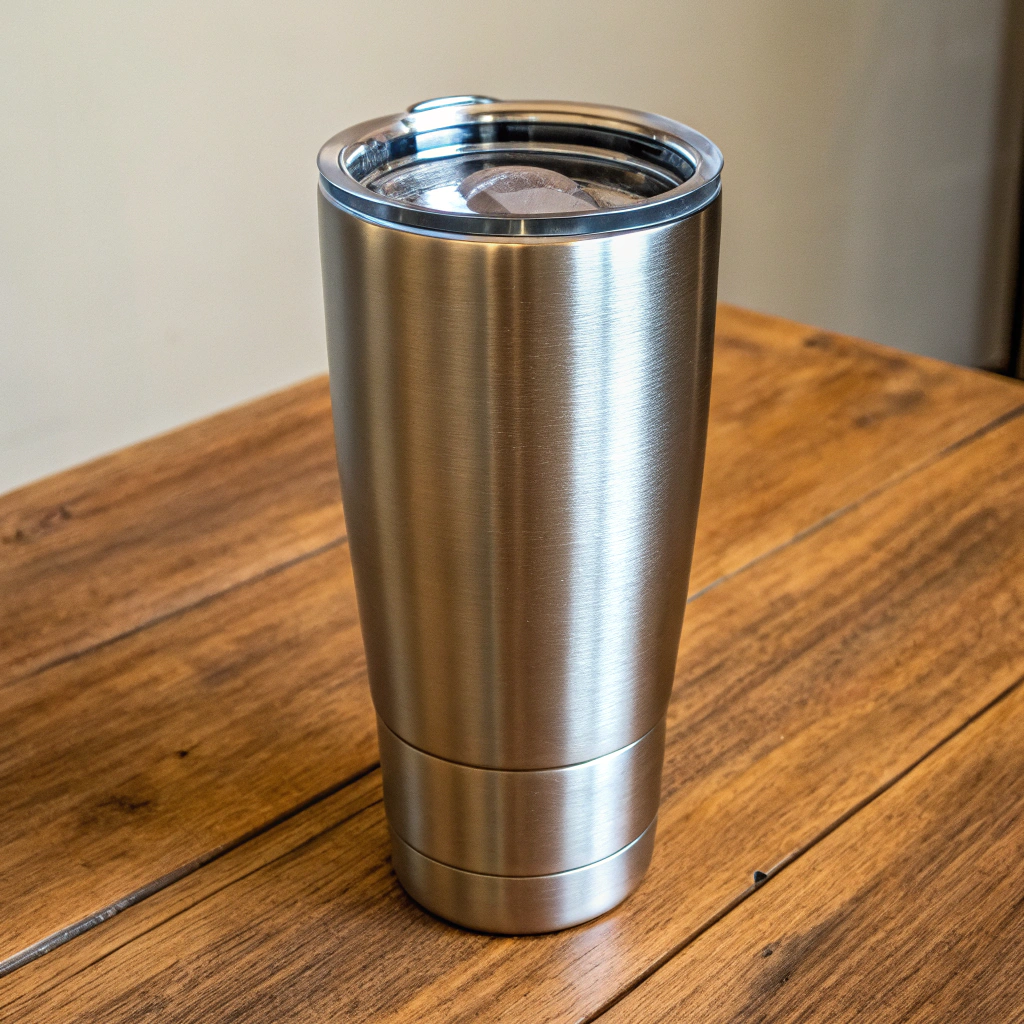
Leaching Thresholds, Electropolishing, and Daily Maintenance
Toxicological studies monitoring metal migration into drinking water confirm that trace releases of nickel and chromium from certified food-grade 304 stainless steel fall well below conservative World Health Organization (WHO) and European Directorate for the Quality of Medicines (EDQM) safety limits. The only exception applies to individuals with medically diagnosed, severe dermal nickel allergies, who may prefer pure titanium or borosilicate glass.
The interior finish directly affects safety. High-quality stainless steel bottles undergo an industrial electropolishing process rather than standard mechanical abrasion. Electropolishing dissolves microscopic surface peaks, leaving a mirror-smooth finish that stops bacterial biofilms from anchoring and prevents tea or coffee tannins from absorbing into the metal.
To keep a stainless steel bottle hygienic and safe for years of daily use:
- Avoid Chlorine Bleach: Never clean stainless steel with chlorine-based bleaches or abrasive scouring pads, which strip the protective chromium oxide layer and cause localized pitting corrosion.
- Use Mild Cleaners: Wash daily with warm water, mild dish soap, and a soft-bristle nylon bottle brush.
- Routine Deep Cleaning: Remove mineral scale or coffee residues using a mixture of baking soda and warm water or diluted food-grade citric acid.
Safety & Hygiene Parameter | Certified Food-Grade 304 Steel | Low-Grade 201 Commercial Steel | Coated Aluminum Bottle |
|---|---|---|---|
Heavy Metal Migration | Far below WHO/FDA safety limits | Can leach trace manganese if unpassivated | Safe only while liner remains intact |
Acidic Fluid Compatibility | Stable with coffee, tea, and lemon water | Pits over time when exposed to citrus | Acid can dissolve damaged internal liners |
Bacterial Adhesion Risk | Very Low (Electropolished mirror finish) | Moderate (Rougher internal tooling marks) | Low initially; increases if liner cracks |
Thermal Shock Resistance | Handles boiling water to freezing ice | Handles boiling water without warping | Single-wall conducts heat dangerously |
What Is Healthier, Stainless Steel or Aluminum?
Are you trying to decide which material belongs on your desk or inside your gym bag for long-term well-being? Comparing both materials across their physical lifespans reveals why one stands out as the healthier choice.
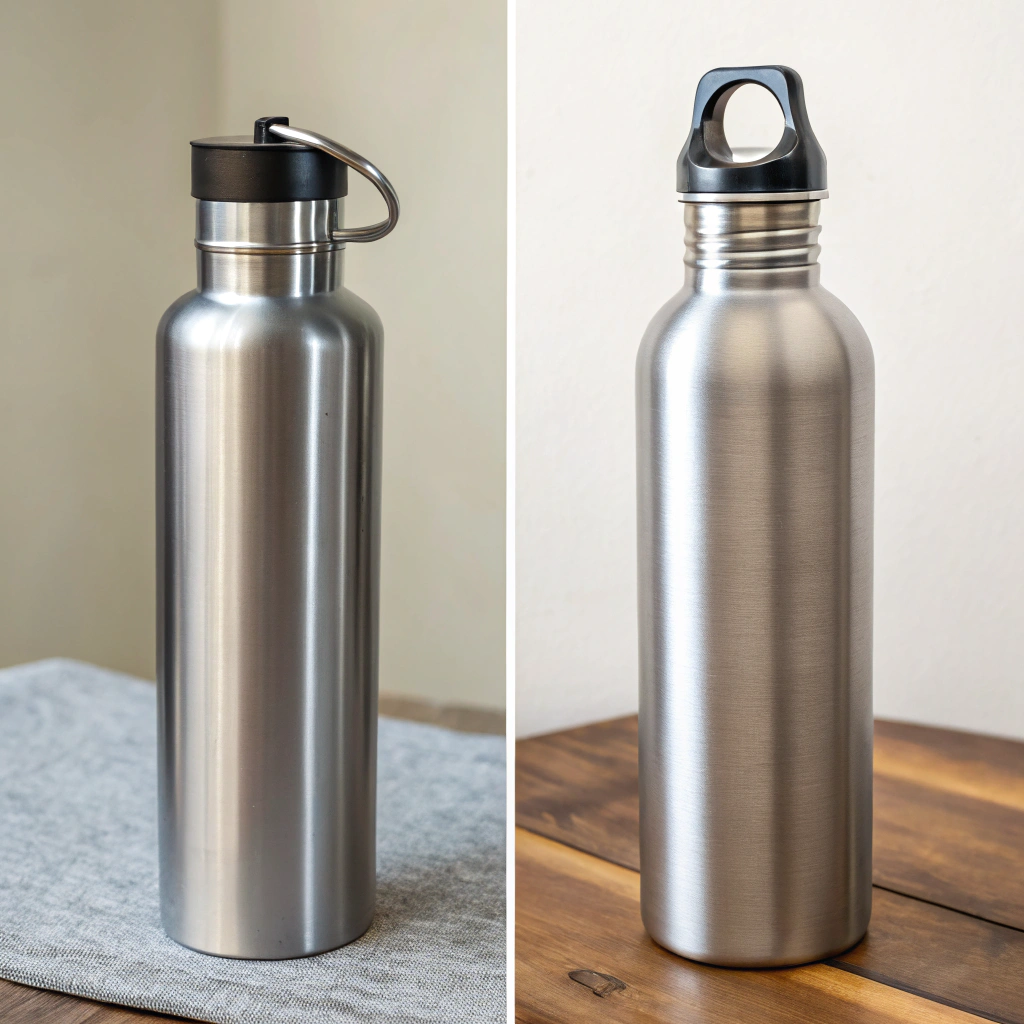
Stainless steel is healthier than aluminum for reusable drinkware because it requires no synthetic resin or epoxy inner liners, poses zero risk of BPA or plasticizer migration, and maintains its structural integrity without denting or peeling over years of use.
Linings, Impact Durability, and Long-Term Integrity
The primary health distinction between the two metals centers on the internal barrier. Because an aluminum bottle cannot safely hold everyday acidic liquids without reacting, factories coat the interior with an epoxy, polyamide, or ceramic-composite spray that is baked at high temperatures. While modern quality aluminum bottles use BPA-free liners, these coatings are still thin synthetic polymers.
Over months of daily use, dropping an aluminum bottle onto asphalt or dropping ice cubes into its interior can create micro-fractures in that flexible liner. Once the lining is compromised, liquid can reach the bare aluminum underneath, and the damaged coating edges can begin flaking off.
Stainless steel avoids this vulnerability altogether. The metal is uniform all the way through its wall thickness; there is no secondary coating to crack, scratch, or peel off. Even if a stainless steel bottle gets dented on its outer base, the interior food-contact surface remains inert, non-toxic, and structurally safe.
Core Health Dimension | Food-Grade 304 Stainless Steel | Coated Aluminum Water Bottle | Healthier Material Winner |
|---|---|---|---|
Internal Surface Composition | 100% Solid inert alloy (No coating) | Synthetic baked polymer / epoxy spray | Stainless Steel: Eliminates all liners |
Plasticizer / Resin Exposure | Completely zero synthetic coatings | Dependent on chemical liner composition | Stainless Steel: Zero chemical leaching |
Drop & Impact Resilience | Hard alloy; dents rarely fracture inner wall | Softer metal; dents can crack interior lining | Stainless Steel: Safer after drops |
Odor & Flavor Transfer | Non-porous; washes completely clean | Can absorb lingering flavors over time | Stainless Steel: Keeps water taste pure |
Weight Advantage (Portability) | Heavier (Double-wall adds mass) | Noticeably lighter (Easier on wrists) | Aluminum: Better for ultra-light sports |
Conclusion
Stainless steel is the better, healthier choice for everyday hydration because its solid, unlined construction delivers durable, non-reactive, and easy-to-clean performance that keeps your water pure without relying on synthetic internal coatings.